Table of Contents
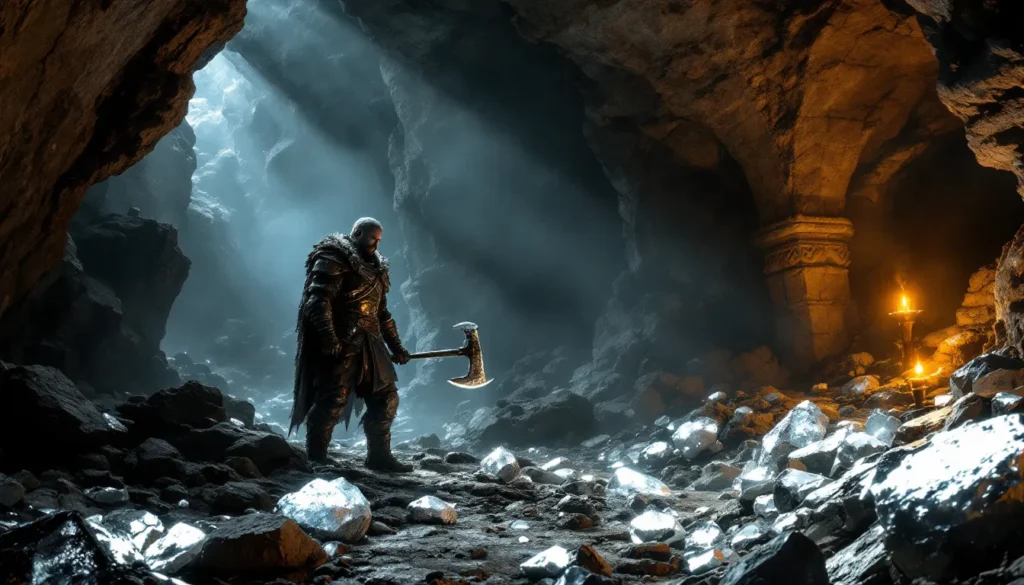
ToggleSilver might not be the flashiest resource in Skyrim, but it’s one of the most consistently useful. Whether you’re looking to craft silver jewelry for Transmute spell-based builds, stock up on high-value ore for trading, or just need funds for a new house purchase, knowing where and how to mine silver efficiently can save you hours of pointless wandering. This guide covers every silver mine location in Skyrim, the mechanics behind ore extraction, practical tips for maximizing your haul, and strategies to turn your mining operation into a legitimate income stream. By the end, you’ll understand not just where to swing your pickaxe, but why it matters for your playstyle.
Key Takeaways
- Skyrim silver mines offer a consistent income stream with four primary locations—Kolskeggr Mine being the richest with 4–5 veins per respawn cycle.
- Silver ore smelts into ingots worth 25 gold each, making silver mining a viable early-to-mid game money-making strategy that also levels Smithing skills simultaneously.
- Efficient silver mining requires route planning around 30-day respawn cycles, inventory management, and selling to multiple merchants to avoid hitting their gold limits.
- The Transmute Ore spell converts iron ore to silver ore, effectively multiplying your ore output and making silver farming profitable even early game.
- Equip the Jeweler’s perk at 60 Smithing to double your jewelry production value, turning silver mining into a wealth-generation system when combined with crafting and enchanting.
What Are Skyrim Silver Mines and Why Should You Care?
Silver in Skyrim serves a specific but essential role. Unlike iron ore, which fills basic crafting needs early on, or gold ore, which is rarer but still common enough, silver sits in a sweet spot: valuable enough to justify collection runs, but not so abundant that farming it becomes pointless. Understanding silver’s value requires knowing both its crafting applications and its market value.
Silver as a Crafting and Trading Resource
Silver ore and silver ingots are primarily used for two things. First, they’re the base material for silver jewelry, rings, necklaces, and circlets. If you’re running a build centered around Transmute Spells (particularly the Paralyze spell, which deals extra damage to undead and humanoids when combined with certain perks), silver jewelry enchanted with the right properties becomes viable. More importantly though, silver ingots are worth 25 gold each at base value, and ore sells for even more when smelted. This makes silver farming a legitimate money-maker, especially for players who’ve already exhausted Skyrim’s more profitable ventures.
Beyond raw gold generation, silver ties into Skyrim’s economy in ways that matter. Jewelry crafting counts toward your Smithing skill, which means mining and smelting silver lets you level two skills simultaneously, a smart move for low-level characters. Jewelry also stacks neatly in your inventory, meaning you can carry far more value in silver items than in heavy ore. For merchants with vendor perks, selling ten silver necklaces is often more profitable than selling a single weapon or piece of armor.
The real advantage, though, is simplicity. Unlike glass or ebony, which require multiple ore types, silver is pure self-contained value. Find a silver mine, work the vein, smelt the ore, and you’ve got commodity goods ready to flip.
Mining Mechanics and Ore Extraction Basics
Mining in Skyrim is straightforward mechanically, but there’s real nuance in how to optimize your efficiency. The moment you activate an ore vein with a pickaxe equipped, the ore extraction animation triggers. Depending on your game version and whether you’re playing on console or PC, this takes anywhere from 2–4 seconds per ore. Players often overlook that the ore yield isn’t fixed, it depends on both the vein type and your character level, though the difference is minor.
Each ore vein in Skyrim has a set number of ore chunks it contains. When you mine, you extract one chunk at a time. For silver veins specifically, you’ll typically get 2–3 chunks per successful swing, though this can vary based on game difficulty and whether you’re using mods. The pickaxe is the only tool that matters for ore extraction: spells, weapons, and other gear don’t influence yield or speed.
How to Mine Silver Efficiently
Efficiency in mining boils down to three factors: movement, vein saturation, and inventory management. First, don’t linger at a single vein. Once you’ve extracted all available ore (the vein will disappear from your interaction prompt when depleted), move immediately to the next one. Hovering at a dead vein wastes precious time.
Second, understand vein respawn mechanics. Silver veins respawn approximately every 30 in-game days, meaning if you’re serious about mining as income, rotating between multiple mines becomes essential. You can’t endlessly farm a single vein in one session, so planning your route matters. Return to a mine you’ve already cleared only after enough time has passed for respawns.
Third, fast travel whenever possible. The animation doesn’t skip, but standing around watching ore clouds is dead time. Get in, mine, get out. If a location has five silver veins and you’re at capacity, mine four, leave, sell or smelt, and come back for the fifth. This prevents getting stuck partway through.
One often-missed detail: wearing mining gear doesn’t boost extraction speed. Heavy armor, robes, nothing affects the actual mining animation. What matters is having the pickaxe equipped and a clear vein. That’s it.
Tools You’ll Need for Successful Mining
You need exactly one tool: a pickaxe. Any pickaxe works. The common iron pickaxe is fine, though it weighs 10 units. If you’re encumbered or minimizing weight for some reason, the pickaxe is the one item you genuinely can’t drop.
Beyond the pickaxe itself, bring practical gear. A set of Iron Armor or better reduces the risk of dying to wandering enemies while you’re immobile during the extraction animation. Carrying extra weight capacity helps too, the Steed Stone boon, the Conditioning perk from Heavy Armor, or simply leveling Stamina increases your carrying capacity without needing gear slots.
Consider bringing a Transmute Ore spell or spell tome if you’re planning a serious mining run. This spell converts iron ore to gold ore (and gold ore to silver ore), giving you flexible material conversion. Finding a tome costs around 1,000 gold at spell vendors, but it turns your iron farming into silver farming on demand. This is particularly useful early game when you need quick silver income but haven’t unlocked high-value mine locations yet.
Some players bring healing potions for mine encounters. This is practical, not essential. Most silver mines have weak enemies, bandits and the occasional spider, but being prepared beats losing 20 minutes to death and respawn.
All Skyrim Silver Mine Locations and How to Find Them
Skyrim has four primary silver mine locations plus several secondary spawns. Knowing all of them is crucial for serious mining, you want options for rotating respawns and avoiding areas that are currently cleared.
Halted Stream Camp
Location: Northwest of Whiterun, in the foothills south of Ustengrav. Follow the river north from Riverwood and you’ll find the camp marked on your map.
What you’ll find: Halted Stream Camp contains one silver ore vein, making it the smallest silver location in Skyrim. But, it’s also the closest to the game’s central hub, making it ideal for low-level characters or quick farming runs when you’re already near Whiterun. The camp itself is defended by bandits, typically a bandit chief, archers, and melee fighters. The vein is inside the camp structure, so you’ll need to clear it before mining safely.
Value assessment: Skip this as a primary location if you’re serious about income. One vein per respawn cycle isn’t worth the travel time compared to richer deposits elsewhere. Hit it opportunistically when you’re in the area, but don’t plan a dedicated farming route around it.
Kolbjorn Barrow
Location: Far northwest, in the mountainous region between Morthal’s Dawnstar and the northern coast. It’s one of the more remote locations, accessible from Dawnstar or via the wilderness.
What you’ll find: Kolbjorn Barrow offers two silver ore veins alongside extensive draugr enemies. This is a quest-involved location tied to Gjalund Salt-Marsh’s mining interests, though you can mine freely regardless. The barrow itself is a Nordic tomb dungeon, meaning it’s filled with draugr, traps, and ancient pressure plates. Mining here requires combat readiness or stealth.
Value assessment: Worthwhile if you’re already in Dawnstar or exploring the northern regions. The two veins justify the trip, but the remote location and heavy enemy concentration make it less efficient for pure ore farming. Better as a bonus during other quests.
Sanuarach Mine
Location: Southwest of Markarth, nestled in the Reach mountains. It’s accessible from Karthwasten or via cross-country travel from Markarth itself.
What you’ll find: Sanuarach Mine contains three silver ore veins, making it one of the better returns for a single location. The mine entrance is guarded by a few bandits or mages (depending on game version and progress), but once inside, it’s relatively clear. The interior is a simple linear tunnel with minimal dungeon complexity.
Value assessment: Excellent efficiency. Three veins in a single, manageable location with light enemy resistance makes this a core location for silver farming. Respawns are reliable, and the short tunnel means less time spent navigating versus mining.
Karthwasten Silver Mine and Kolskeggr Mine
Location: Both are in the southwestern Reach region, near Karthwasten. Karthwasten Silver Mine is directly adjacent to the town, while Kolskeggr Mine is a bit further north in the mountains.
What you’ll find: Karthwasten Silver Mine has two veins in its lower chamber, though one is locked behind a very minor puzzle (you’ll know it when you see it). Kolskeggr Mine is significantly larger, with four to five silver ore veins spread throughout multiple chambers. Kolskeggr is the single richest silver location in vanilla Skyrim. Both mines are defended by forsworn, native Reach warriors with heavy melee and magic. The encounters are moderate difficulty, nothing that should challenge a mid-level character.
Value assessment: Kolskeggr Mine is non-negotiable for serious farming. Four to five veins per respawn cycle from a single location is the best return in the game. The forsworn defense is manageable, and the interior layout, while larger, is still navigable without excessive backtracking. Karthwasten is secondary but useful as a quick supplemental run if you’re already in the area.
Maximizing Your Silver Mining Strategy
Knowing where the mines are means nothing without a strategy for actually executing profitable runs. The difference between casual ore collection and serious farming comes down to planning and consistent execution.
Best Practices for Ore Collection and Management
Your first decision: are you mining ore or smelt-before-sale? Raw ore is lighter than ingots (ore weighs 1 unit, ingots weigh 2 units), but ingots sell for more value. The math changes based on your carrying capacity and travel distance. If you’re running multiple short trips, mine ore and carry more per load. If you’re doing one long expedition, smelt everything first and carry fewer items of higher value.
Organize your mining route by proximity and respawn cycles. Create a circuit: hit Sanuarach, then move to Kolskeggr, then Karthwasten. This takes approximately 30–40 minutes depending on your level and gear. By the time you complete the circuit and sell the ore, enough time has passed that respawns are starting to activate. When you’re serious about income, this becomes your repeatable loop.
Inventory management during runs: drop your non-essential gear at a safe location before mining. Leave behind heavy armor pieces you’re not wearing, potions you don’t need immediately, or quest items cluttering your inventory. The few minutes spent dropping and picking up items at a camp or nearby structure is time saved from multiple trips back to town. Veterans use a single location (like a purchased house) as a staging area for storage and retrieval.
Don’t ignore secondary ore spawns. Skyrim has scattered ore deposits in dungeon locations, caves, and exterior rock formations that aren’t dedicated mines. These veins don’t respawn as predictably, but they’re useful for supplementing your run if you stumble across them. Keep an eye out while traveling between mines.
One subtle point: stamina management matters less in mining than in combat, but being out of stamina extends animation times slightly and makes you vulnerable to surprise attacks. Carry a Stamina Restoration potion or two, especially if you’re mining in hostile territories.
Leveling Your Mining Skills Faster
Mining itself doesn’t directly level any skill, this is a common misconception. But, smelting ore into ingots levels Smithing, and crafting items with those ingots levels Smithing further. To level Smithing efficiently while mining silver, smelt everything you collect, then craft silver jewelry. Each ring or necklace crafted grants Smithing experience, and jewelry is cheap (requires only the ingot and a hilariously small amount of gold), making it the optimal craft for fast leveling.
Pair this with the Transmute spell if possible. Converting iron ore to silver ore lets you farm iron (vastly more abundant) and convert it on the fly. Your effective silver output increases, your Smithing levels faster, and your ore-to-ingot conversion is streamlined. This is the fastest path to maximizing both Smithing and silver income simultaneously.
For reference, veterans report that a single serious mining run (hitting all major locations) can net 100–150 silver ore depending on respawn state. Smelted and crafted into jewelry, this yields roughly 5,000–7,500 Smithing experience, meaningful progress per session.
Trading and Selling Silver Ore for Profit
Silver mining is only valuable if you can actually sell what you’ve collected. Understanding Skyrim’s merchant system and how to maximize returns turns a time-sink into legitimate income.
Finding Buyers and Maximizing Gold Returns
Any general goods merchant in Skyrim will buy silver ore and ingots. Major vendors include Eorlund Gray-Mane in Whiterun’s Drunken Huntsman, Khajiit caravans (if you’ve spoken to them once), Elwyn in Solitude, and the Khajiit caravan merchants that loop between major cities. Some players travel specifically to the Khajiit caravan outside Dawnstar or Morthal’s court in Dawnstar because these merchants have larger gold pools and fewer competing items taking up their purchase inventory.
Here’s the critical detail: merchants have gold limits. Each merchant can only carry a certain amount of gold in their inventory. If you dump 500 ore at once, you’ll exceed their buying power and have to wait for them to respawn with a refilled wallet. The workaround is simple, sell to multiple merchants, or return to the same merchant after a few in-game days pass (merchants refresh their gold).
To genuinely maximize returns, use the Merchants perk from the Speech skill tree (rank 2, requires 50 Speech). This increases item prices by 10% across the board, which translates to meaningful extra gold per ore pile. For every 100 silver ore you sell, this is approximately 200 extra gold. Over multiple runs, it’s significant.
Silver ingots sell for 25 gold base value: silver ore sells for 10 gold base value when unsmelt. The obvious move is to always smelt before selling. A single silver ore smelts into a single silver ingot at no tool cost (just fuel in the smelter), gaining you 15 gold per ore with zero effort. But early game, if you’re encumbered and storage is limited, raw ore might be worth selling immediately just to free up space.
Advanced strategy: smith silver ore into jewelry first, then sell the jewelry. A silver ring costs 1 ingot and sells for roughly 30–40 gold (varies by enchantment and perks). This is only 5–15 gold more than selling the ingot raw, so it’s marginal unless you’re also leveling Smithing. Use it as a bonus, not your primary income method. What matters is the core loop: mine, smelt, sell. Rinse and repeat on respawn cycles.
Crafting with Silver: From Ore to Finished Goods
While pure ore farming is profitable, actually crafting with silver opens different possibilities. Some builds specifically use silver items, and understanding the crafting side expands your play options.
Silver Jewelry and Decorative Items
Silver is used for rings, necklaces, and circlets. These are purely decorative items with no intrinsic bonus unless you enchant them. But, enchanted silver jewelry can be extremely valuable. A silver ring enchanted with Resist Poison is worth more than a raw silver ingot, and if you’ve got the materials, crafting and enchanting these items generates profit while leveling two skills simultaneously.
Circlets are unique because they’re head-slot armor that doesn’t replace helmets. You can wear a full suit of heavy armor with a helmet AND a circlet, getting double coverage in the head slot. This makes silver circlets (or any circlet) valuable for min-maxing defensive builds. If your build benefits from extra Magicka, Intelligence, or Willpower, a silver circlet with the right enchantment becomes loadout-relevant, not just decoration.
The crafting itself is trivial: approach a forge, select “Forge,” navigate to jewelry, and pick your item. Each ring costs 1 silver ingot, each circlet costs 1 ingot, and each necklace costs 1 ingot. The resource cost is negligible, your limiting factor is ore supply and smelting speed.
One legitimate use case: if you’re running a Transmute-spell-focused build (typically high Magicka, light armor), wearing a full set of silver jewelry enchanted with Magicka and Magicka Regeneration provides a meaningful boost. This is niche, but it’s an actual reason to craft beyond “sell for gold.” For pure meta-focused players, but, gold conversion is the primary value.
Smithing Perks That Enhance Silver Crafting
Several perks directly increase silver’s value and crafting efficiency. Orcish Smithing (level 40 Smithing) and higher-tier smithing perks improve the quality of items you craft, making them worth more when sold. A well-crafted silver ring is worth measurably more than a poorly crafted one.
The Transmute perk (level 30 Smithing) isn’t a full perk in itself: rather, it unlocks learning the Transmute Ore spell tome, which converts iron ore to gold ore and gold ore to silver ore. This is one of the most powerful tools for silver farming because it breaks the scarcity of ore veins. Farm iron (abundant in every bandit camp), transmute to silver, and effectively multiply your ore output.
Jeweler’s (level 60 Smithing) doubles your material return when crafting jewelry. This means each silver ingot now produces two completed items of equivalent value. In practice, this means every ring you craft is now worth approximately 60 gold instead of 30 gold (before enchantments). This perk trivializes silver farming profitability, it’s the single biggest multiplier for jewelry production.
For serious crafting, priority goes: get Orcish Smithing early for quality, grab Jeweler’s as soon as possible (the 60 Smithing requirement is easily achieved through mining runs), and optionally pursue higher tiers if you’re running other smithing builds. The combination of these perks with consistent ore supply turns silver into a printing press for in-game wealth.
Many builders pair this with the Investor perk from Speech (10k gold+ from a single merchant investment), creating compound wealth generation. Not essential, but it’s worth knowing the synergies.
Common Mining Challenges and Solutions
Mining in Skyrim looks simple until you hit real-world complications. Here’s how to handle the common issues that derail runs.
Dealing with Enemies at Mine Locations
Almost every silver mine in Skyrim is occupied. Bandits at Halted Stream, forsworn at Kolskeggr, draugr at Kolbjorn, you’ve got hostile NPCs wherever valuable ore congregates. The core problem: you’re immobile during the mining animation, making you vulnerable to stun-lock or backstabs.
Solutions depend on your build. Heavy armor characters should simply tank damage and heal through it. A Restoration potion or two negates most enemy damage, and with a decent defense stat, mining runs are uninterrupted. Light armor users need to stealth or clear enemies first. Either pickpocket enemies to move them away, or engage them before mining. Some players use Mayhem or Calm spells to temporarily disable enemies while they mine, this is slower but safer.
Advanced tactic: lure individual enemies away from ore veins using projectile weapons or range, then mine the remaining unengaged ore. This requires more time but reduces risk. Another option: return at a different time of day. Some enemies have patrol patterns: positioning yourself to mine while they’re out of immediate sightline works.
One overlooked solution: pickpocket a key from an enemy, lock them in a separate chamber, and mine safely. Mines often have gate structures or separate rooms. It’s unconventional but effective for avoiding constant damage while you’re stuck in the mining animation.
Inventory Management While Mining
Carrying capacity is the real enemy of mining efficiency. You’ll hit your weight limit before you’ve emptied all available veins, forcing multiple trips back to sell or drop items. This kills profitability through time waste.
Pragmatic solution: use a portable staging area. Drop your non-essential gear, weapons you’re not actively using, excess potions, quest items, at a nearby location before you start mining. Focus on carrying only ore, a pickaxe, and healing potions. Once full, fast travel to a merchant, sell, and return. This workflow is faster than optimizing individual weight values.
Alternatively, lever the Steed Stone blessing (50% weight capacity increase) or the Conditioning perk from Heavy Armor (50% less armor weight). These permanently increase your practical carrying capacity without needing to juggle items.
Some players abuse game mechanics slightly by dropping ore into containers just outside mines, then retrieving it later when they have free inventory space. This works, but it requires keeping track of where you’ve hidden items. Easier to just make multiple short runs.
A final note: don’t underestimate the power of a second character or mod tools for inventory expansion if you’re seriously dedicated to mining. But vanilla Skyrim mining is entirely doable with proper planning, the bottleneck is always time and execution, not inherent game limits.
Conclusion
Silver mining in Skyrim is deceptively deep. On the surface, it’s straightforward: find a mine, mine ore, sell ore, profit. But optimizing that loop involves understanding respawn mechanics, route planning, carrying capacity management, crafting synergies, and NPC gold limits. The players generating serious in-game wealth from mining aren’t playing differently, they’re just playing more deliberately.
Starting is simple. Hit Sanuarach Mine or Kolskeggr, smelt your ore, sell to a local merchant. From there, expand your route. Add Karthwasten, then Kolbjorn if you’re northern-based. Time your visits to align with respawn cycles. Once you’ve got a reliable 50k+ gold per run, consider whether crafting silver jewelry and applying smithing perks makes sense for your character. The meta evolves based on what you’re building toward, but the core principle remains: silver is reliable, abundant enough to farm, and valuable enough to matter.
For players deep into Skyrim’s economy or looking for sustained income without relying on quests or looting, silver mining is often overlooked in favor of more exotic methods. That’s the real advantage, you’re not competing with other players for resources, and the game’s respawn system ensures sustainable, indefinite supply. Whether you’re funding a house, saving for training, or just want to understand Skyrim’s crafting economy, this guide covers everything you need to execute a profitable mining strategy.